
How is technology transforming traditional manufacturing into intelligent, automated, and data-driven operations in 2025?
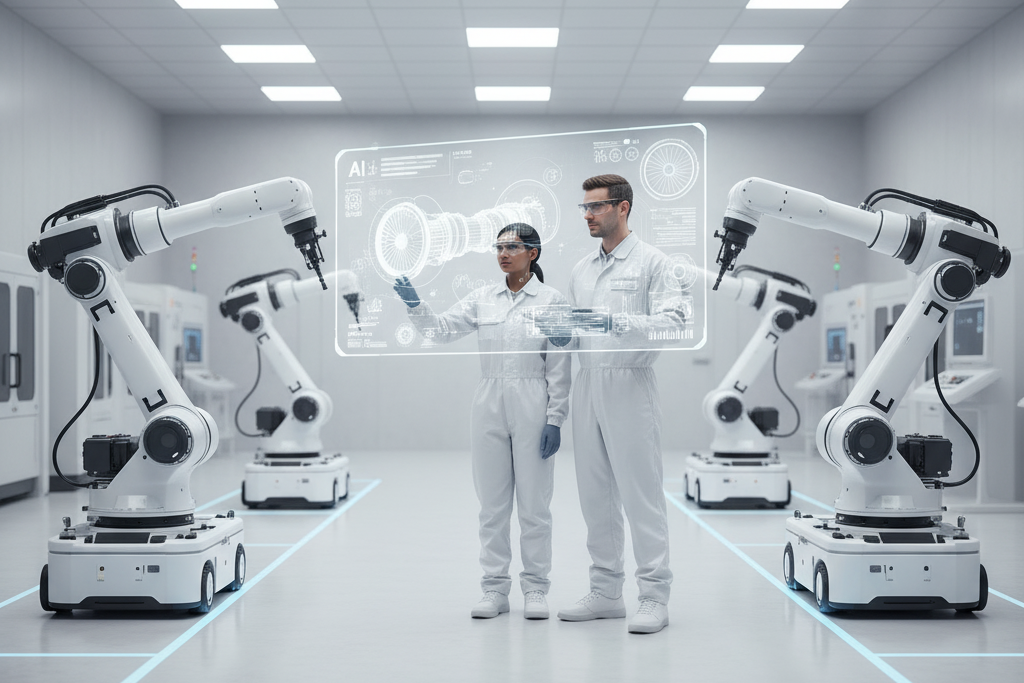
The manufacturing world is going through one of the biggest transformations in history. Once defined by assembly lines, manual labor, and mechanical systems, today’s factories are powered by artificial intelligence, smart automation, data analytics, and advanced robotics.
In 2025, innovation isn’t just about building faster machines — it’s about creating intelligent ecosystems where humans and technology work side by side. Whether you’re producing cars, medical equipment, or consumer goods, manufacturing technology has become the backbone of efficiency, sustainability, and global competitiveness.
A New Era: From Traditional to Smart Manufacturing
If we look back a few decades, factories operated on predictable schedules, human supervision, and a lot of paperwork. Today, those processes have been replaced by digitally connected systems that learn, adapt, and even make decisions on their own.
This movement is known as Industry 4.0, and it’s changing everything — from how products are designed to how they’re delivered. The next phase, Industry 5.0, focuses on bringing humans back into the loop — combining machine precision with human creativity.
In other words, manufacturing is no longer just about mass production. It’s about personalization, sustainability, and intelligence.
What’s Driving Innovation in Manufacturing
Manufacturers today rely on a blend of cutting-edge tools and smart systems. Let’s explore the major innovations reshaping the industry in 2025.
1. Artificial Intelligence (AI) and Machine Learning (ML)
AI has become the brain of modern manufacturing. Machines now collect and analyze massive amounts of data to predict breakdowns, detect product defects, and optimize production schedules.
For instance, AI can alert operators about a machine failure before it happens, saving both time and money. Machine learning models continue to improve over time, meaning every production run becomes more efficient than the last.
At Tiso Studio, we help manufacturers integrate AI analytics and predictive maintenance systems to boost efficiency and minimize downtime.
2. Automation and Robotics
Automation has always been part of manufacturing, but now it’s evolving into something smarter. Collaborative robots, or “cobots,” are designed to work safely alongside humans, performing repetitive or heavy tasks while people focus on creativity and quality control.
Fully automated production lines use robots that assemble, pack, and ship products — 24/7, without fatigue. This not only boosts output but also ensures consistent quality.
Tiso Studio supports manufacturing clients by creating custom automation strategies that improve workflow and reduce human error.
3. The Internet of Things (IoT)
IoT connects machines, sensors, and devices in a single intelligent network. Every piece of equipment sends real-time data about its performance, temperature, vibration, and output.
Imagine being able to check the health of every machine in your factory — from your laptop or phone. That’s what IoT makes possible.
We design smart IoT dashboards at Tiso Studio, giving manufacturers instant visibility into their production lines and enabling data-driven decisions.
4. 3D Printing (Additive Manufacturing)
3D printing is revolutionizing how products are designed and built. Instead of waiting weeks for a prototype, manufacturers can now print parts in hours using digital blueprints.
This innovation reduces waste, speeds up production, and makes customization easier than ever. Aerospace, automotive, and medical companies are using 3D printing to create lightweight, complex components that were once impossible to make with traditional methods.
Tiso Studio helps companies integrate digital design and production software that complements 3D printing technology for smarter product development.
5. Cloud and Edge Computing
Modern manufacturing depends on fast, reliable access to data. Cloud computing allows teams across the world to collaborate on production, share updates in real time, and store massive amounts of data securely.
Meanwhile, edge computing brings processing closer to where data is created — allowing real-time responses in critical situations like quality control or equipment monitoring.
At Tiso Studio, we help manufacturers implement secure cloud integrations that make operations more scalable and connected.
6. Augmented Reality (AR) and Virtual Reality (VR)
AR and VR are no longer just for gaming — they’re transforming industrial training and maintenance.
With AR headsets, technicians can see 3D overlays of machinery, guiding them through repairs step-by-step. VR allows engineers to walk through virtual factories before they even exist, helping identify design flaws early.
These technologies reduce downtime, cut costs, and enhance safety. Tiso Studio builds AR/VR-enabled digital tools to help manufacturers train employees and visualize production processes more effectively.
The Push Toward Sustainability
Innovation isn’t just about efficiency anymore — it’s also about responsibility. The world is demanding cleaner, greener, and more ethical manufacturing processes.
Manufacturers are now using renewable energy, recycled materials, and smart energy management systems to reduce their carbon footprint. AI and IoT tools monitor energy consumption in real time, helping factories minimize waste and save resources.
Tiso Studio helps companies develop digital sustainability solutions that track performance metrics, reduce waste, and build transparent, eco-friendly supply chains.
Smart Factories: Where Intelligence Meets Production
A smart factory is the heart of modern manufacturing — a space where every machine, process, and operator is connected through data.
Smart factories don’t just produce goods; they analyze, predict, and adapt. If a part fails, systems detect it instantly and adjust operations automatically. If demand spikes, AI increases production speed while maintaining quality.
At Tiso Studio, we specialize in building digital ecosystems — from IoT monitoring systems to real-time analytics dashboards — that make smart factories truly smart.
Challenges Along the Way
Even though innovation is exciting, adopting new technology comes with challenges. Manufacturers often face:
- High investment costs for modern equipment
- Cybersecurity risks with connected systems
- Skill gaps in the workforce
- Integration issues between old and new systems
Tiso Studio works closely with manufacturers to overcome these obstacles through digital transformation planning, staff training, and secure technology solutions tailored to each business.
Data: The New Gold in Manufacturing
In the digital age, data is the most valuable resource. Every machine, sensor, and process generates information that can help improve productivity, quality, and safety.
With advanced analytics, manufacturers can forecast demand, manage supply chains, and optimize performance across all stages of production.
Tiso Studio helps companies make sense of complex data by creating AI-powered analytics dashboards that visualize key metrics and turn raw information into meaningful insights.
Humans + Machines = The Future of Work
There’s a misconception that machines will replace people. In reality, the future of manufacturing is about collaboration, not competition.
Humans bring creativity, problem-solving, and emotion. Machines bring precision, consistency, and speed. Together, they form an unstoppable combination that defines Industry 5.0 — an era where people and technology co-create solutions.
Tiso Studio builds intuitive digital interfaces and training tools that empower human workers to work confidently alongside advanced systems.
The Future of Manufacturing: Intelligent, Sustainable, and Human-Centric
By 2030, the manufacturing industry will be almost unrecognizable compared to today. Production lines will be self-optimizing, supply chains will be fully digital, and products will be designed and delivered faster than ever before.
The focus will shift from simply producing goods to creating value — through customization, sustainability, and data-driven innovation.
Companies that embrace this change early will have a major advantage in the global market. Those that resist will struggle to keep up.
At Tiso Studio, we’re proud to help businesses transform through AI-powered tools, automation strategies, IoT solutions, and cloud technology — enabling them to innovate with purpose and confidence.
How Tiso Studio Supports Manufacturing Innovation
Here’s how Tiso Studio helps manufacturers stay ahead in a fast-changing world:
- AI & Automation Solutions: Smarter systems for faster, more reliable production.
- IoT Integration: Real-time insights and connected operations.
- Data Analytics Dashboards: Turning raw data into actionable intelligence.
- Digital Twin Technology: Simulating processes to reduce risk and improve design.
- Sustainability Tools: Tracking emissions, waste, and energy in real time.
Our mission is simple — to help manufacturing companies embrace innovation that drives growth, efficiency, and sustainability.
Manufacturing has always been about progress — from steam engines to robotics, from manual labor to machine intelligence. But in 2025 and beyond, innovation is about something deeper: building smarter, cleaner, and more connected systems that put people and the planet first.
Technology will keep evolving, but the real change comes from how businesses use it — to inspire creativity, empower workers, and make the world better.
At Tiso Studio, we believe innovation isn’t just about adopting new tools — it’s about reimagining what’s possible.



Recent Comments