
AR in Education — The Future of Interactive Learning
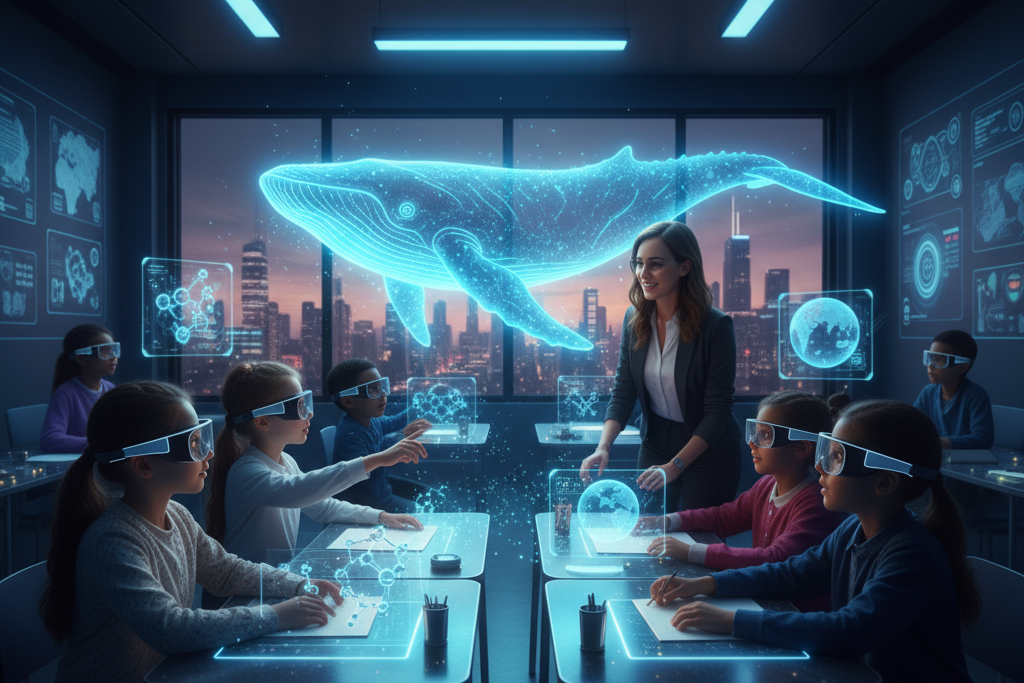
In the digital age, AR in Education is revolutionizing the way students learn and teachers teach. Augmented Reality (AR) blends the physical and digital worlds, turning textbooks, labs, and lessons into immersive, interactive experiences. With AR, learning becomes more engaging, visual, and practical—helping students grasp complex concepts faster while improving retention and participation.
By 2025, AR in Education is not just a trend but a foundational technology for schools and universities striving to build smart classrooms. From interactive science experiments to 3D anatomy models, AR-powered learning platforms are making education more inclusive, collaborative, and future-ready.
Why AR in Education Matters in 2025
As hybrid learning models become the new normal, AR in Education bridges the gap between in-person and digital experiences. It allows educators to deliver hands-on lessons through smartphones, tablets, and AR headsets—without geographical or resource constraints.
Students can visualize chemical reactions, explore historical monuments, or even conduct simulated surgeries—all from their desks. For educators, AR offers new ways to assess, personalize, and gamify learning, transforming passive education into active participation.
According to a report by Statista, the global AR in Education market is projected to exceed $5.3 billion by 2028, driven by digital transformation, accessible AR devices, and demand for experiential learning.
How AR in Education Works: Key Technologies Powering Smart Classrooms
To understand how AR in Education functions, let’s break down the technologies that make it possible:
1. Marker-Based AR
Uses printed images or QR codes as triggers. When scanned by a device, they display digital overlays—such as 3D models or videos—that enhance the textbook experience.
2. Markerless AR
Relies on GPS, sensors, and computer vision to overlay digital content directly on real-world surfaces, ideal for field trips and geography lessons.
3. Projection-Based AR
Projects virtual content onto physical objects or environments—useful for demonstrating engineering and architecture concepts.
4. Superimposition AR
Replaces part of the real view with an augmented version, like visualizing historical reconstructions or scientific simulations.
Together, these technologies enable AR-powered education platforms to bring learning to life in ways traditional methods never could.
Core Benefits of AR in Education

Implementing AR in Education delivers measurable benefits across academic performance, engagement, and accessibility.
1. Enhanced Engagement and Retention
Interactive AR lessons increase student engagement by up to 60%, helping them visualize complex theories more easily.
2. Personalized Learning Experiences
AR platforms adapt content to individual student needs—offering customized exercises, quizzes, and progress tracking.
3. Improved Collaboration and Creativity
AR enables shared group experiences, where students can build, manipulate, and discuss virtual models together in real time.
4. Accessibility and Inclusivity
AR in Education supports diverse learners, including those with disabilities, by providing audio-visual aids, translations, and real-time feedback.
5. Safe and Cost-Effective Experimentation
Students can conduct chemistry experiments or mechanical designs safely in virtual labs without the cost or risk of real-world materials.
AR in Education: Real-World Applications and Use Cases
AR is already reshaping learning environments across sectors:
• STEM Learning
Students can explore 3D molecular structures, understand physical laws, and simulate robotics projects with interactive AR apps.
• Medical Education
Future doctors and nurses use AR to study anatomy through lifelike 3D visualizations, reducing dependency on cadavers.
• History and Geography
AR apps like Google Expeditions let students travel through time and space—exploring ancient civilizations and geographic landmarks.
• Vocational Training
A.R in Education helps train technicians, pilots, and engineers through real-world simulations—enhancing practical skills and reducing training time.
• Art and Design
AR empowers students to visualize and manipulate 3D art models, explore spatial creativity, and experiment with design concepts virtually.
Data-Driven Impact: What the Numbers Say
- Schools implementing Augmented Reality in Education report 35% higher learning retention rates.
- 50% of teachers using AR tools find it improves classroom collaboration.
- Educational institutions leveraging AR platforms see a 40% reduction in training costs due to virtual learning modules.
These numbers underline that AR is not a futuristic vision—it’s an active driver of educational transformation in 2025.
Challenges in Implementing AR in Education
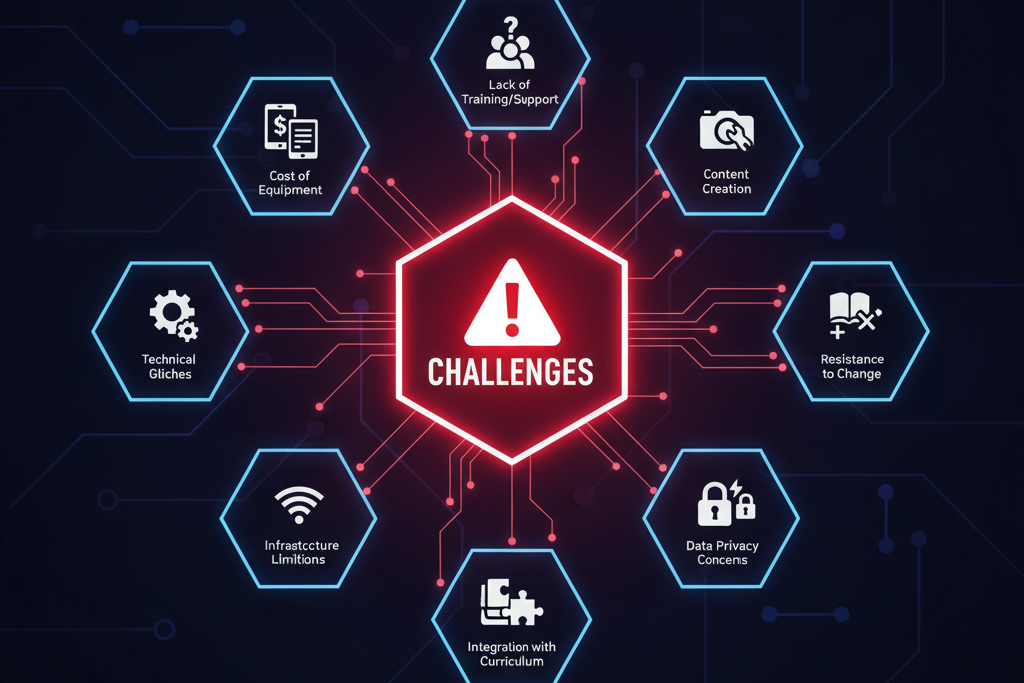
While promising, integrating A.R in Education presents a few challenges:
1. High Implementation Costs
Schools need AR-compatible devices and teacher training, which can increase initial costs.
2. Content Availability
Creating high-quality AR educational content requires collaboration between educators and developers.
3. Digital Equity
Not all students have equal access to AR-enabled devices—bridging this gap is essential for inclusive learning.
4. Technical Limitations
AR systems require strong internet connectivity and device compatibility to ensure seamless performance.
Overcoming Barriers to AR Adoption
To make AR in Education scalable and sustainable:
- Invest in teacher training for AR tool integration.
- Partner with edtech firms like Google for Education or Unity Learn for cost-effective A.R resources.
- Adopt cloud-based AR platforms that run on low-end devices.
- Encourage curriculum redesign to include AR-driven lessons across subjects.
Future Trends: What’s Next for AR in Education
By 2025 and beyond, A.R in Education will evolve through several key trends:
- AI-Enhanced AR Learning — Adaptive systems will personalize lessons using real-time analytics.
- AR and the Metaverse — Students will collaborate in shared 3D virtual classrooms, creating global learning ecosystems.
- Wearable AR Devices — Affordable AR glasses will replace tablets for hands-free interaction.
- Gamification of Learning — A.R-based challenges and rewards will make education more enjoyable and immersive.
As AR technology becomes mainstream, it will redefine not just how we teach—but how we understand and experience knowledge itself.
Measuring ROI: The Value of AR in Education
Educational institutions can measure A.R in Education ROI through:
- Improved student performance and participation rates.
- Reduced resource costs (lab materials, physical models).
- Enhanced teacher productivity via automation and analytics.
- Student satisfaction and retention metrics in higher education.
When implemented strategically, AR delivers both academic excellence and financial sustainability.
Ethical and Privacy Considerations in AR Education
Responsible use of A.R in Education requires clear ethical guidelines:
- Protect student data privacy under GDPR and FERPA.
- Ensure content neutrality and inclusivity.
- Limit screen time to promote balanced digital health.
- Maintain transparency in AI-driven AR assessments.
These safeguards ensure AR enhances learning without compromising ethical or privacy standards.
Conclusion
A.R in Education is more than a digital enhancement—it’s a complete reimagining of learning itself. As classrooms evolve into dynamic, interactive spaces, AR ensures students are not just absorbing information but truly experiencing it.
The institutions that adopt AR today are preparing students for a future defined by creativity, critical thinking, and digital literacy.
Explore more about emerging technologies transforming industries on Tiso Studio’s Emerging Technology page.
Reimagine Learning with AR: Build the Classroom of Tomorrow Today
Transform your educational ecosystem with immersive AR solutions that inspire, engage, and educate.
Ready to make learning truly interactive?
Visit Tiso Studio’s Emerging Technology to explore how our experts can design custom AR education experiences that bring your classrooms to life.
FAQ’S
1. How does AR in Education improve learning better than traditional classroom methods?
AR turns abstract lessons into interactive 3D experiences, allowing students to see, touch, and engage with concepts visually. This dramatically boosts understanding and memory retention compared to static textbook reading or lectures.
2. What subjects benefit the most from Augmented Reality in education?
STEM subjects (Science, Technology, Engineering, Math) see the most transformative impact, but AR is equally powerful in history (virtual time travel), geography (3D maps), medical training (anatomy simulation), and creative arts (3D modeling).
3. Do schools need expensive headsets to use AR in classrooms?
Not at all. Most AR learning tools work on smartphones and tablets already used by students. Advanced headsets are optional and usually adopted later for immersive labs and simulations.
4. Is AR safe for young children and long-term screen exposure?
Yes, when used responsibly. AR encourages interactive physical-digital learning rather than passive screen consumption. It reduces sedentary screen time by making students move, explore, and interact with virtual content.
5. What are the biggest challenges schools face when adopting AR, and how can they overcome them?
The biggest barriers are cost, teacher training, and content availability. These can be minimized by using cloud-based AR apps, starting with pilot programs, and partnering with edtech providers for pre-built curriculum-aligned AR content.





Recent Comments