
AR/VR Marketing: Engaging Customers Beyond Screens
Marketing is no longer limited to screens — it’s stepping into the real world. With AR/VR marketing, brands are creating immersive experiences that captivate audiences, strengthen brand loyalty, and turn engagement into emotion. As consumers crave interaction over information, Augmented Reality (AR) and Virtual Reality (VR) are transforming how businesses communicate their stories and products.
In 2025, marketers are moving beyond static ads and videos to offer customers interactive storytelling environments. From virtual product demos to AR try-ons, this evolution marks a new chapter in experiential marketing that blends creativity and technology.
What Is AR/VR Marketing and Why It Matters
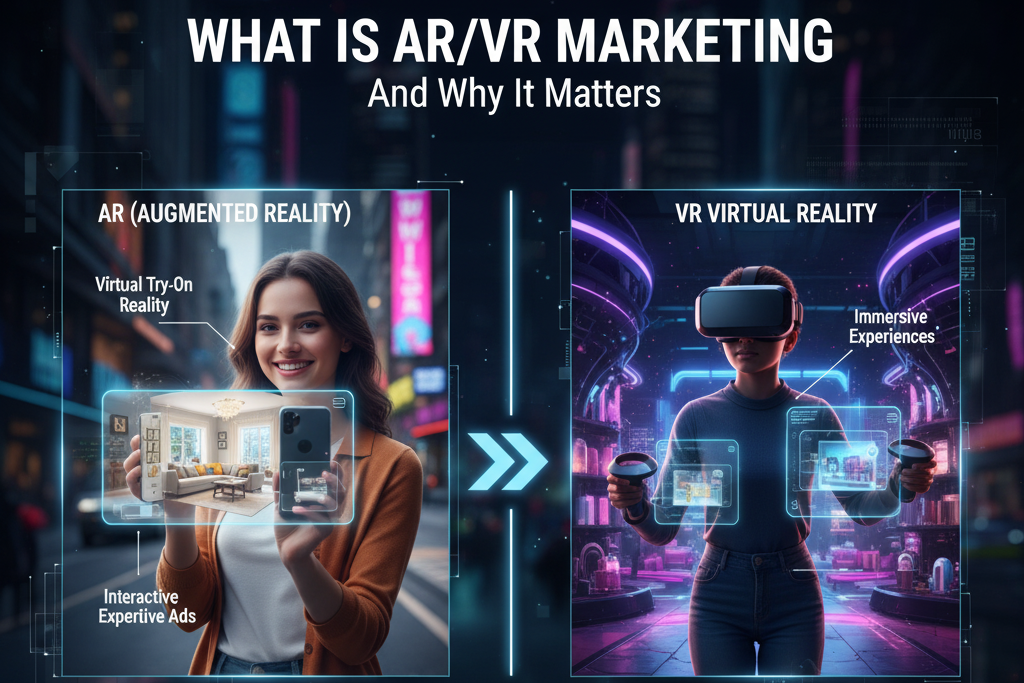
AR/VR marketing combines Augmented Reality and Virtual Reality technologies to engage audiences through interactive experiences. AR enhances the real world by overlaying digital elements, while VR creates fully immersive digital environments.
These technologies give brands a new language for storytelling — one where customers don’t just watch a campaign; they live it.
Why it matters:
- Higher engagement: Immersive experiences drive stronger emotional connections.
- Better retention: Consumers remember AR/VR content up to 70% longer than traditional ads.
- Increased conversions: Interactive demos influence buying decisions more effectively than static visuals.
- Brand differentiation: Early adopters of AR/VR marketing stand out in competitive markets.
How AR/VR Marketing Enhances Customer Experience
1. Interactive Product Visualization
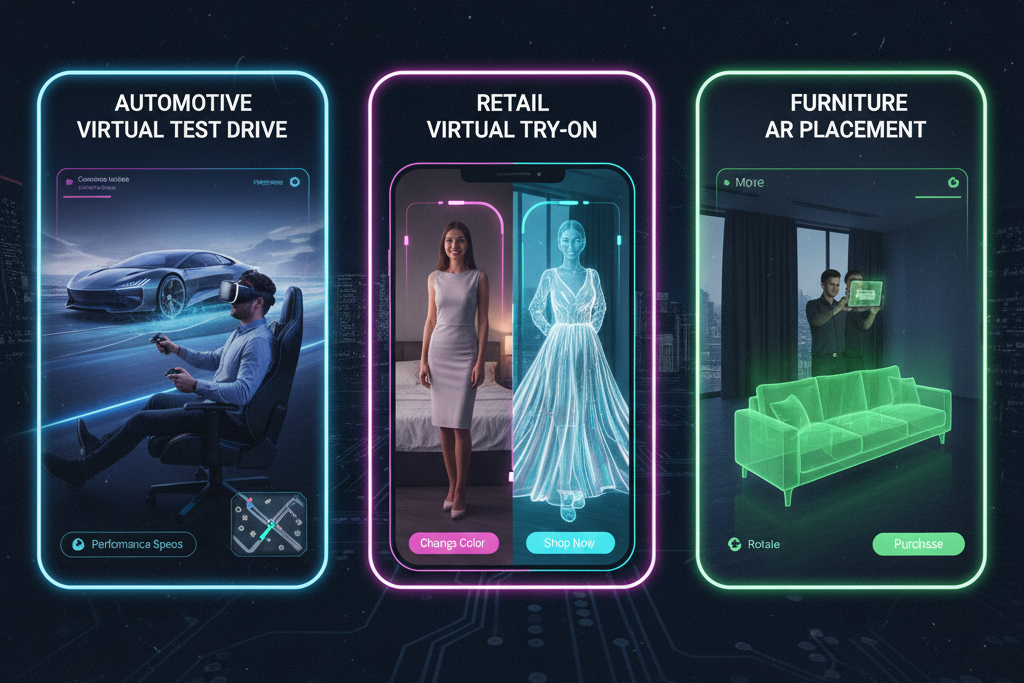
AR enables customers to see how products fit into their daily lives. For example, IKEA’s AR app lets users visualize furniture in their homes before purchase. This approach not only reduces returns but also enhances buyer confidence.
In VR marketing, customers can explore an entire virtual store, interact with items, and make purchases — all from home. These experiences merge eCommerce and entertainment seamlessly.
2. Immersive Brand Storytelling
Traditional marketing tells stories. AR/VR marketing lets users live them.
Brands like Coca-Cola and Nike have used VR to create interactive brand worlds where users can explore behind-the-scenes stories, attend virtual events, or even design custom products in real-time.
3. Enhanced Event Experiences
From virtual concerts to digital product launches, AR/VR has redefined event marketing. Companies can host hybrid events — merging physical and digital attendance — giving global audiences access to brand experiences without geographical limits.
4. Emotional Engagement Through Presence
VR creates a sense of presence — the feeling of truly “being there.” This emotional depth enhances brand trust and recall. When customers walk through a virtual car showroom or attend a virtual charity run, they feel connected, not targeted.
Key Benefits of AR/VR Marketing for Businesses
1. Boosting Brand Awareness
AR/VR experiences go viral easily due to their novelty. Campaigns that leverage filters, lenses, and virtual tours gain high social media shareability.
2. Increasing Conversion Rates
Interactive product trials reduce uncertainty and influence faster purchasing decisions. Sephora’s Virtual Artist app, for instance, allows users to “try before they buy,” significantly boosting conversions.
3. Reducing Customer Churn
When customers engage deeply, they stay longer. Personalized AR/VR experiences create emotional loyalty, making customers less likely to switch brands.
4. Enhancing Data Collection
Every interaction in AR/VR environments generates actionable insights — such as where users look, what they interact with, and how long they stay. This behavioral data fuels smarter marketing strategies.
Examples of Successful AR/VR Marketing Campaigns
1. Pepsi Max’s AR Bus Stop Campaign
Pepsi turned a regular London bus shelter into an AR experience where passersby saw UFOs, tigers, and meteors appear on the street. This innovative idea increased brand mentions by 35% on social media overnight.
2. Nike’s Virtual Try-On Experience
Nike uses AR/VR marketing through its “Nike Fit” app, letting customers visualize how shoes fit their feet using 3D scanning. This drastically improved both satisfaction and conversion rates.
3. L’Oréal’s AR Beauty Tech
L’Oréal’s AR-powered “ModiFace” app allows users to test makeup virtually. This interactive experience enhanced online engagement and redefined customer personalization.
4. Lowe’s VR Training for Home Improvement
Home improvement giant Lowe’s introduced VR tutorials to help customers visualize and practice home renovations before starting real projects, improving customer confidence and purchase intent.
Integrating AR/VR into Your Marketing Strategy
1. Define Clear Objectives
Before diving into AR/VR marketing, identify your goals. Are you aiming for brand awareness, engagement, or conversion? Clarity ensures measurable outcomes.
2. Choose the Right Technology
- AR: Best for mobile engagement, social filters, and product previews.
- VR: Best for full immersion, virtual tours, and 3D brand experiences.
3. Focus on User Experience (UX)
Successful AR/VR marketing campaigns prioritize seamless interactivity. Avoid overly complex setups that require special hardware. Accessibility ensures higher engagement.
4. Integrate with Other Marketing Channels
AR/VR works best as part of a larger digital ecosystem. Connect immersive campaigns to your email, social media, and content marketing strategies for cohesive storytelling.
5. Measure and Optimize
Track engagement metrics, dwell time, and conversion paths. Tools like Google Analytics 4, Meta Spark, and Unity Analytics can help analyze performance effectively.
The Future of AR/VR Marketing
In 2025 and beyond, AR/VR marketing will continue to evolve with AI-driven personalization, haptic feedback, and 5G connectivity. As devices become more affordable, these experiences will shift from novelty to necessity.
Brands that adapt early will not only capture attention but build lasting emotional relationships with their customers.
According to Statista, the AR/VR market in marketing is projected to surpass $75 billion by 2030, making it one of the fastest-growing digital communication tools globally.
Best Practices for Implementing AR/VR Marketing
- Start Small: Test with AR filters or short virtual demos before large-scale deployment.
- Prioritize Accessibility: Ensure campaigns work across devices and require minimal downloads.
- Focus on Value: The experience must add real utility — not just visual appeal.
- Collaborate with Experts: Partner with agencies specializing in immersive brand storytelling, like Tiso Studio, to craft unique experiences that convert.
Let’s Build Immersive Campaigns That Convert
Step into the future of AR/VR marketing with Tiso Studio — your trusted partner in emerging technology. Our experts help brands create immersive, data-driven marketing experiences that captivate audiences and drive measurable results.
Ready to make your brand unforgettable? Explore more insights on Emerging Technology
FAQ’S
1. How is AR/VR different from traditional digital marketing?
Traditional marketing relies on passive viewing (videos, banners, images), while AR/VR creates active participation. Instead of watching a campaign, users experience it — which leads to deeper emotional engagement and higher recall.
2. Do businesses need expensive hardware to use AR/VR in marketing?
Not necessarily. Most AR experiences run directly on smartphones through web AR or social platforms (Instagram, Snapchat, Google Lens). VR can also be delivered via lightweight headsets or browser-based 3D environments.
3. Which industries benefit the most from AR/VR marketing?
Retail, real estate, automotive, education, fitness, tourism, and luxury brands see the highest ROI — especially where visualization or experience influences purchase decisions.
4. How do brands measure the success of AR/VR marketing campaigns?
Metrics include engagement time, interaction rates, conversion lift, repeat visits, and social shareability. Heatmaps and behavioral tracking inside immersive experiences also reveal what users explore most.
5. Is AR/VR marketing suitable for small and mid-sized businesses too?
Absolutely. With accessible tools and WebAR solutions, immersive campaigns no longer require massive budgets. Even SMEs can create AR filters, product try-ons, or micro VR tours to stand out from competitors.





Recent Comments