
Data-Driven Marketing Strategies for 2025: Turning Insights Into Growth
In today’s digital-first economy, Data-Driven Marketing Strategies are no longer optional—they’re the foundation of every successful campaign. As 2025 unfolds, businesses that harness analytics, automation, and artificial intelligence (AI) are outperforming competitors who still rely on instinct. The key is clear: data transforms marketing from guesswork into measurable growth.
This article explores how Data-Driven Marketing Strategies are evolving in 2025, the essential technologies behind them, and how your business can leverage them for better engagement, personalization, and profitability.
Why Data-Driven Marketing Matters in 2025
Marketing in 2025 is fast, dynamic, and data-fueled. Consumers leave digital footprints everywhere—from social media interactions and email clicks to voice searches and in-store beacons. The brands that capture, analyze, and act on these signals are the ones winning customer loyalty.
According to a HubSpot study, companies using Data-Driven Marketing Strategies are 6x more likely to be profitable year over year. Data helps marketers understand audience needs, predict behavior, and craft campaigns that feel personal rather than promotional.
Modern businesses are shifting from “what happened” analytics to “what will happen next” predictions, creating agile marketing systems that adapt in real-time.
Core Components of Data-Driven Marketing Strategies
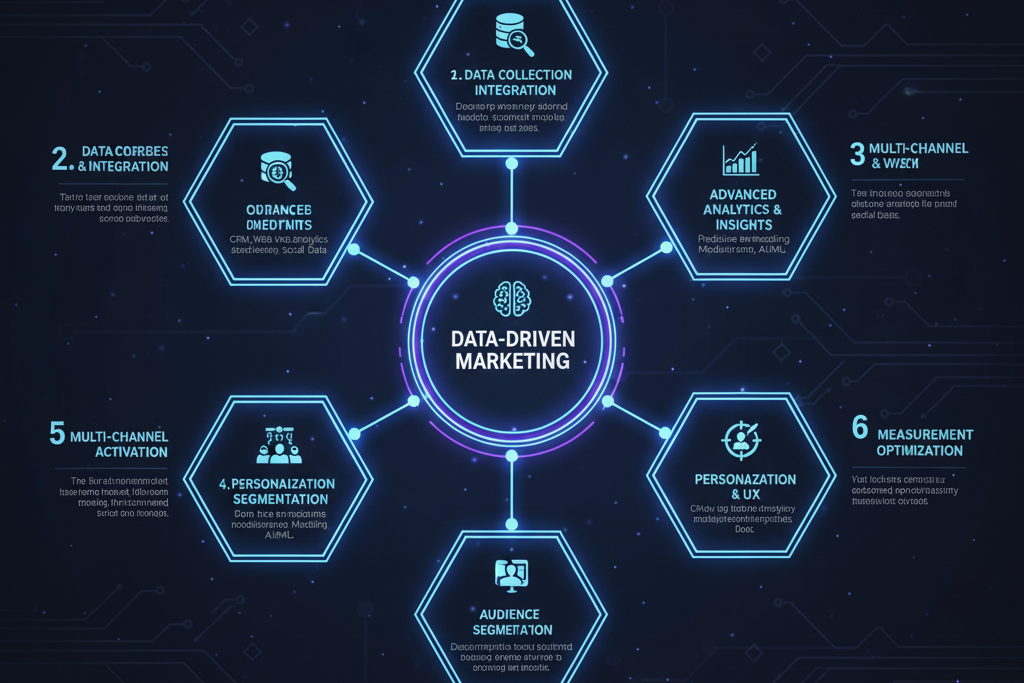
To truly benefit from data-driven methods, organizations must build strategies grounded in five pillars: data collection, integration, analysis, personalization, and optimization.
1. Data Collection and Integration
Marketers today gather information from numerous touchpoints—websites, CRMs, IoT devices, and mobile apps. Integrating this data into a centralized system enables a single customer view. Platforms like Google Analytics 4 and HubSpot Marketing Hub help unify datasets across channels for real-time insights.
Transitioning to integrated data pipelines ensures marketers can identify patterns, reduce redundancy, and make informed decisions faster.
2. Predictive Analytics and AI Insights
Artificial intelligence now powers smarter Data-Driven Marketing Strategies by identifying future opportunities. Predictive analytics uses machine learning models to anticipate customer needs, segment audiences, and optimize ad placements.
For example, AI can predict which users are likely to churn, which leads are ready to convert, or what content will drive higher engagement.
3. Personalization at Scale
In 2025, personalization goes beyond first-name greetings. With the help of AI and real-time data, marketers can deliver dynamic content that adapts to each user’s context.
E-commerce platforms, for instance, use AI algorithms to recommend products based on browsing history and purchase behavior. This tailored approach increases retention and conversion rates dramatically.
4. Marketing Automation
Automation tools are essential for executing Data-Driven Marketing Strategies efficiently. Platforms such as Marketo and ActiveCampaign automate email workflows, ad delivery, and lead scoring based on real-time user interactions. This not only saves time but ensures consistent communication across every stage of the customer journey.
5. Data-Backed Optimization
Continuous improvement defines the best data-driven strategies. A/B testing, real-time dashboards, and campaign analytics allow marketers to refine content, target segments, and messaging for optimal performance. Businesses that analyze data weekly or daily can pivot faster, preventing wasted ad spend and maximizing ROI.
How Data-Driven Marketing Transforms Campaign Performance
The true power of Data-Driven Marketing Strategies lies in their ability to transform decisions into measurable impact. By combining customer data, predictive models, and behavioral insights, marketers can create experiences that convert.
Improved Targeting and Segmentation
Data allows brands to divide audiences by demographics, behaviors, and psychographics. This granularity ensures campaigns reach the right people with the right message at the right time.
Enhanced Customer Journey Mapping
Understanding every step of the buyer’s journey—awareness, consideration, decision—helps marketers design experiences that align with intent. Real-time data tracking ensures each campaign nurtures leads more effectively.
Higher ROI and Conversion Rates
When strategies are grounded in analytics, businesses reduce waste and focus efforts where they matter most. According to Forbes, data-driven companies are 23x more likely to acquire customers and 19x more likely to be profitable.
Agile and Adaptive Marketing
Data provides agility. When consumer preferences or market conditions shift, analytics-driven teams can quickly realign creative assets and budgets. This adaptability makes marketing resilient—even in uncertain times.
Emerging Trends in Data-Driven Marketing for 2025
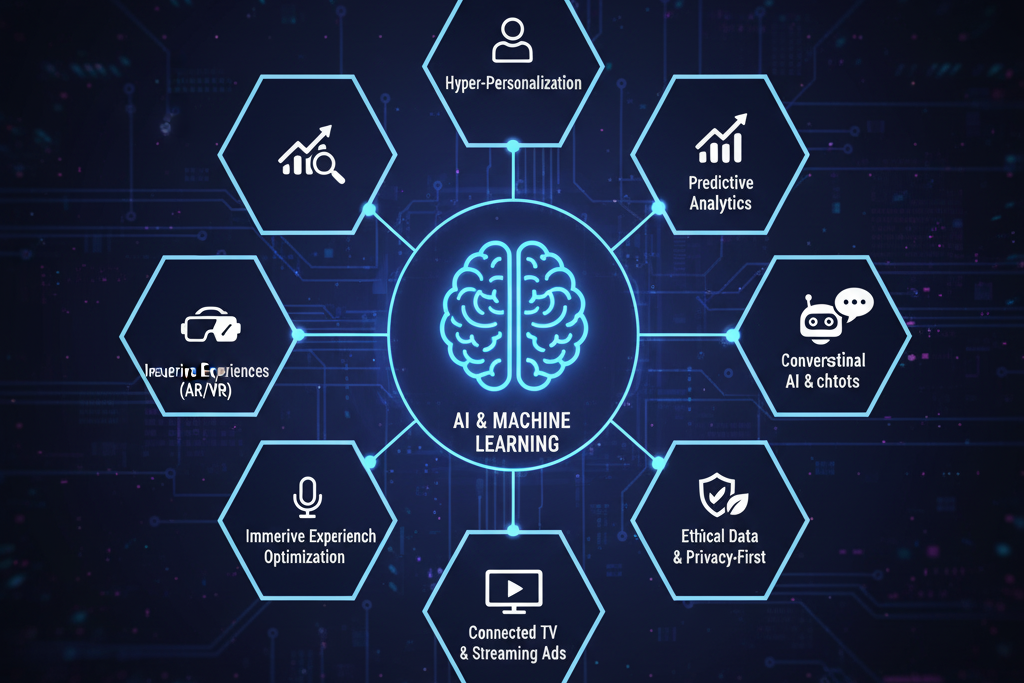
The evolution of Data-Driven Marketing Strategies in 2025 is shaped by several emerging technologies:
AI-Powered Predictive Modeling
AI no longer just analyzes historical data—it forecasts future actions. Predictive models help determine customer lifetime value (CLV), campaign success probability, and optimal pricing strategies.
Privacy-First Data Strategies
With growing privacy concerns and regulations like GDPR and CCPA, marketers must prioritize transparent data usage. First-party data collection through loyalty programs, newsletters, and owned platforms has become the new standard.
Voice and Visual Search Data
Marketers are optimizing for voice and image-based searches, using AI to understand intent and serve more relevant results. These technologies provide new insights into how customers interact with digital ecosystems.
Customer Data Platforms (CDPs)
CDPs are central to Data-Driven Marketing Strategies, consolidating first-party data from multiple touchpoints into a unified profile. This single source of truth helps brands execute omnichannel campaigns with precision.
AI-Powered Creative Optimization
AI tools such as ChatGPT, Jasper, and Adobe Firefly are now integral to creating adaptive ad content. These systems adjust tone, visuals, and CTAs in real time to match audience preferences.
Challenges in Implementing Data-Driven Marketing
While the advantages are clear, adopting Data-Driven Marketing Strategies comes with challenges that businesses must address strategically.
1. Data Silos
Disjointed systems prevent teams from accessing unified insights. The solution is to integrate all marketing, sales, and customer support data into a centralized platform.
2. Data Quality and Governance
Inaccurate or incomplete data can lead to poor decisions. Regular audits, validation protocols, and clear governance policies ensure data integrity.
3. Skills Gap
Many organizations lack expertise in data analytics and AI. Investing in training or collaborating with experienced digital partners—like Tiso Studio—can close the gap and accelerate transformation.
4. Privacy and Compliance
Ethical data practices are crucial. Transparency, consent management, and anonymization safeguard both brand reputation and customer trust.
Practical Roadmap: Building a Data-Driven Marketing Strategy
To deploy effective Data-Driven Marketing Strategies, follow a structured roadmap:
- Define Objectives: Identify measurable goals such as lead growth, ROI improvement, or conversion optimization.
- Collect and Clean Data: Gather first-party data and eliminate duplicates or outdated records.
- Integrate Tools: Use CRM, CDP, and automation platforms for unified insights.
- Analyze and Segment: Employ predictive analytics to identify high-value audiences.
- Personalize Content: Tailor messages and offers to individual preferences.
- Automate and Optimize: Leverage automation to test, learn, and improve continuously.
- Measure ROI: Track KPIs across all channels to ensure measurable results.
Measuring the Impact of Data-Driven Campaigns
Effective measurement defines success. Use the following metrics to evaluate your Data-Driven Marketing Strategies:
- Customer Acquisition Cost (CAC)
- Return on Ad Spend (ROAS)
- Customer Lifetime Value (CLV)
- Engagement Rates (CTR, Open Rate)
- Attribution Accuracy
When data insights are linked directly to revenue and performance metrics, marketing evolves from a cost center into a growth engine.
The Future of Data-Driven Marketing
By 2025 and beyond, the next frontier of Data-Driven Marketing Strategies will focus on AI autonomy, hyper-personalization, and ethical intelligence.
Automation will handle campaign management, while marketers focus on creative strategy and brand storytelling. Businesses that adapt early will gain the advantage of precision marketing powered by ethical, transparent data ecosystems.
Conclusion: Turning Data into Direction
Data-Driven Marketing Strategies are not just a trend—they’re the new standard of competitive marketing in 2025. With AI insights, predictive analytics, and automation, businesses can engage smarter, convert faster, and grow sustainably.
As the digital landscape continues to evolve, those who embrace data today will own tomorrow’s market.
Ready to Build a Data-Driven Future for Your Brand?
At Tiso Studio, we help businesses transform raw data into measurable marketing success. From predictive analytics to personalized automation, our data experts design systems that drive growth, improve efficiency, and future-proof your marketing.
Explore Emerging Technology Insights at Tiso Studio
and see how we can help your business turn insights into impact.
FAQ’S
1. What makes a marketing strategy truly “data-driven” in 2025?
A marketing strategy is considered data-driven when decisions are based on real-time analytics, predictive modeling, and first-party customer data—not assumptions or gut instinct. It involves tracking consumer behavior, analyzing patterns, and using AI to personalize campaigns at scale.
2. How does AI improve data-driven marketing performance?
AI enhances marketing by automating audience segmentation, predicting customer behavior, personalizing content, and optimizing campaigns in real time. It turns raw data into actionable insights, helping marketers achieve higher ROI with less trial-and-error.
3. What type of data is most valuable for modern marketing?
First-party data (collected directly from users through websites, apps, or loyalty programs) is now the most valuable due to privacy regulations. It’s accurate, compliant, and enables deeper personalization compared to third-party data.
4. How can small businesses implement data-driven marketing without a big budget?
Small businesses can start by integrating basic analytics tools (like GA4), using CRM platforms, and adopting affordable AI-driven automation tools. Even small-scale segmentation and personalization can significantly improve conversions without heavy investment.
5. What are the biggest challenges companies face in becoming data-driven?
The top challenges include siloed data systems, lack of skilled analysts, privacy compliance, and poor data quality. The solution lies in integrating tools, building clean data pipelines, and partnering with experts to accelerate transformation.





Recent Comments