
In today’s competitive business environment growth marketing vs traditional marketing, understanding the difference between growth marketing and traditional marketing is essential. While traditional methods focus on brand building and awareness, growth marketing relies on experimentation, analytics, and customer retention to drive measurable results. As consumer behavior evolves and digital ecosystems expand, modern businesses must rethink their approach to achieving sustainable growth.
Transitioning from traditional strategies to growth marketing doesn’t mean abandoning proven methods—it means adapting them with agility, data intelligence, and automation. In this article, we’ll explore the core differences, techniques, benefits, and future trends that define these two approaches.
What Is Traditional Marketing?
Traditional marketing encompasses the classic forms of advertising—print, radio, TV, billboards, and direct mail. These channels have long been the foundation for brand visibility and audience reach. The primary goal is exposure: to place a brand’s message in front of as many people as possible.
However, traditional marketing often struggles with measurable ROI. Campaigns are planned months in advance, rely on broad audience targeting, and lack real-time adaptability. While this approach builds recognition, it can’t easily pivot based on changing market dynamics.
Examples of Traditional Marketing:
- TV and radio advertisements
- Newspaper and magazine placements
- Flyers, billboards, and posters
- Sponsorships and physical events
Even though traditional marketing remains effective for brand awareness, it lacks the flexibility modern marketers require to respond to consumer data.
What Is Growth Marketing?
In contrast, growth marketing is a data-driven, agile, and experimental approach focused on customer acquisition, engagement, and retention. It relies heavily on analytics, automation, and iterative testing to maximize performance. Instead of one large campaign, growth marketing involves continuous optimization.
Growth marketing combines creativity with technology—using tools like A/B testing, marketing automation, behavioral analytics, and customer segmentation to make informed decisions. Its goal isn’t just to acquire customers but to retain and expand their lifetime value.
Core Components of Growth Marketing:
- Data analytics and user insights
- Continuous A/B testing and experimentation
- Automated campaigns and personalization
- Multi-channel integration (email, social, SEO, paid ads)
- Customer journey mapping and lifecycle optimization
Growth Marketing vs Traditional Marketing: The Core Differences
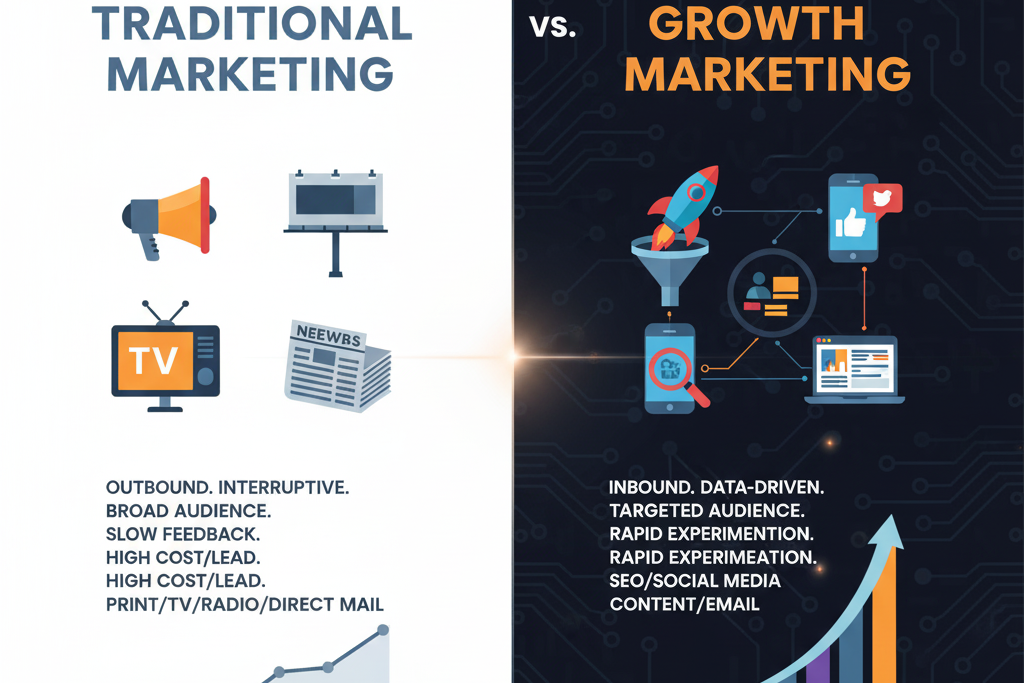
Let’s break down the key differences that define each approach:
| Aspect | Traditional Marketing | Growth Marketing |
|---|---|---|
| Objective | Brand awareness & reach | Measurable growth & retention |
| Approach | Linear, campaign-based | Iterative, data-driven |
| Speed & Flexibility | Slower, planned months ahead | Agile, adaptable in real time |
| Measurement | Difficult to track ROI | Fully measurable through KPIs |
| Channels | Print, TV, Radio, Events | Digital, SEO, Email, Paid Ads |
| Customer Focus | Broad targeting | Personalized experiences |
| Tools Used | Creative design & PR | Analytics, AI, Automation tools |
Through this lens, it’s clear that growth marketing prioritizes measurable outcomes, while traditional marketing focuses on consistent branding.
How Growth Marketing Drives Sustainable Success
Growth marketing doesn’t just aim for visibility—it aims for measurable impact. By using continuous testing and feedback loops, businesses can identify which strategies resonate most effectively with their audiences.
Key benefits include:
- Data-Backed Decisions: Every action is based on metrics, not assumptions.
- Rapid Experimentation: Teams can quickly test new ideas and adapt.
- Higher ROI: Focused spending ensures maximum performance.
- Customer Retention: Growth marketing emphasizes loyalty over one-time conversions.
- Scalability: Success is repeatable through process-driven experimentation.
With such a structured yet creative approach, companies stay responsive to market changes while maintaining a competitive advantage.
Traditional Marketing’s Ongoing Relevance
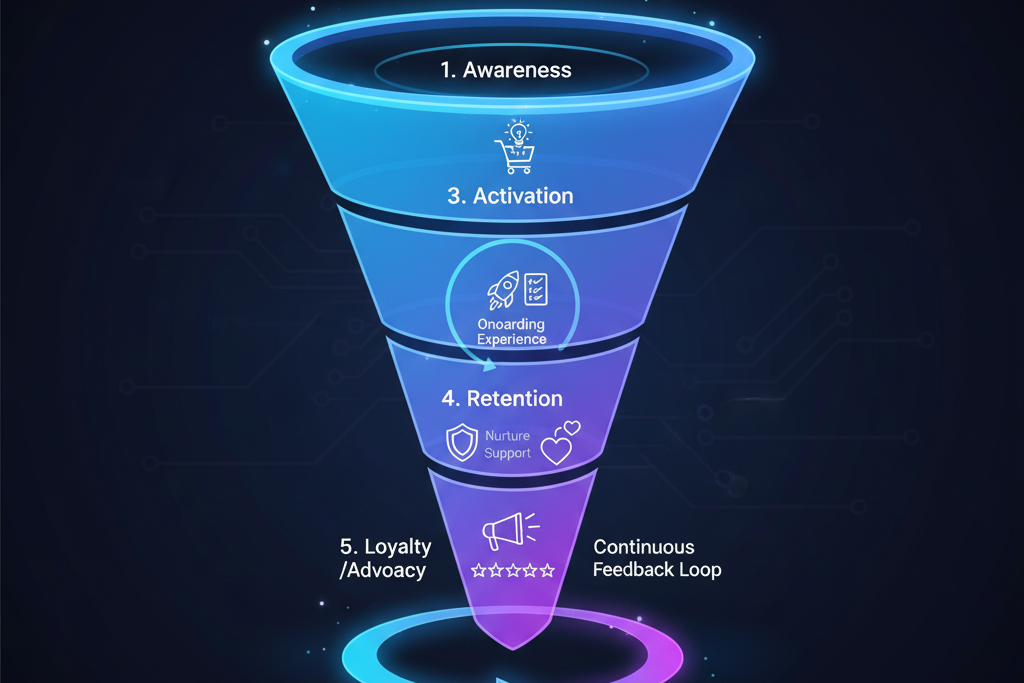
While growth marketing dominates the digital landscape, traditional marketing still plays a vital role—particularly for brand credibility and offline audiences. Large-scale campaigns, television ads, and print placements continue to influence perception and build emotional connections.
Rather than viewing traditional and growth marketing as competitors, modern brands can merge both approaches. Traditional media creates trust and recognition, while growth marketing enhances engagement and data-driven precision.
Integrating Growth Marketing vs Traditional Marketing Strategies
Combining both strategies allows companies to create a holistic marketing ecosystem. Here’s how businesses can integrate them effectively:
- Use traditional media for brand awareness, then retarget engaged audiences with growth campaigns.
- Leverage offline events to capture leads and funnel them into automated digital workflows.
- Incorporate QR codes or digital CTAs in print materials for cross-channel conversion tracking.
- Analyze performance data to refine messaging across both domains.
By integrating insights from both worlds, marketers achieve brand consistency, scalability, and measurable growth.
Measuring the ROI: Growth Marketing Wins the Numbers Game
Measurement defines the modern marketer’s success. Growth marketing allows for comprehensive tracking of every campaign component—clicks, engagement, conversions, and customer lifetime value.
Tools such as Google Analytics, HubSpot, and Mixpanel enable marketers to understand what works in real time. Traditional campaigns, on the other hand, rely on indirect indicators like sales lifts or survey results.
Example:
A growth marketer can test two email subject lines, instantly view which version drives more conversions, and adjust the campaign accordingly. A traditional marketer might wait months for performance data.
This data agility makes growth marketing not only more efficient but also more sustainable for modern businesses.
Future of Marketing: The Hybrid Era
The future lies in hybrid marketing, where both growth and traditional methods coexist. Data and creativity are no longer separate silos—they’re complementary engines of innovation. Businesses that blend these disciplines will outperform those who rely solely on one.
Marketers must focus on agility, personalization, and purpose-driven storytelling while staying anchored in measurable performance.
Conclusion: Growth Marketing vs Traditional Marketing—Choose Smart, Not Sides
Both strategies hold value, but their success depends on context. Traditional marketing builds long-term brand equity, while growth marketing ensures continuous, measurable performance. The smartest brands combine both for maximum impact.
Ready to Accelerate Your Brand’s Growth?
Partner with Tiso Studio to design data-driven growth marketing campaigns that combine creativity and analytics for sustainable success.
Explore Our Emerging Technology Services
FAQ’S
1. Is growth marketing replacing traditional marketing?
Not entirely. Growth marketing is not a replacement but an evolution. While traditional marketing builds brand presence, growth marketing ensures measurable performance and customer retention. Smart brands today use a hybrid strategy to maximize impact.
2. Which is more cost-effective: growth marketing or traditional marketing?
Growth marketing is generally more cost-effective because every campaign is testable, measurable, and optimized in real time. Traditional marketing often requires large budgets with limited performance tracking, making ROI harder to quantify.
3. Can small businesses benefit from growth marketing, or is it only for startups and tech companies?
Absolutely — growth marketing is ideal for small and mid-sized businesses because it focuses on attainable, measurable growth. Even without massive budgets, small businesses can leverage data, automation, and experimentation to scale faster.
4. What skills are required to implement growth marketing successfully?
Growth marketing combines creativity with technical expertise. Key skills include analytics, A/B testing, marketing automation, audience segmentation, and content optimization. A strong understanding of the customer journey is essential.
5. How long does it take to see results from growth marketing compared to traditional marketing?
Growth marketing delivers faster feedback and insights because it runs in iterations. You can start seeing measurable results in weeks, unlike traditional marketing campaigns which may take months to show impact.





Recent Comments