
In the fast-paced world of digital transformation, one thing can bring operations to a grinding halt — downtime. Whether caused by server crashes, software glitches, or cyber threats, downtime not only disrupts productivity but also drains resources and damages brand reputation. The solution? IT maintenance.
Regular IT maintenance acts as the backbone of business reliability. It ensures systems are secure, updated, and optimized for performance. In 2025, where businesses rely heavily on cloud services, data analytics, and AI-driven platforms, preventive IT maintenance is no longer optional — it’s a necessity for sustainable growth and operational continuity.
Understanding IT Maintenance and Its Importance
IT maintenance involves a series of proactive measures — from updating software and managing hardware to monitoring network health and cybersecurity defenses. It ensures your IT environment remains stable and efficient.
Without regular maintenance, even minor technical issues can escalate into major failures. Research by Gartner shows that businesses lose an average of $5,600 per minute during unplanned IT downtime. That translates to massive revenue loss, particularly for companies relying on digital infrastructure.
Read Gartner’s insights on downtime cost analysis.
Types of IT Maintenance Every Business Needs
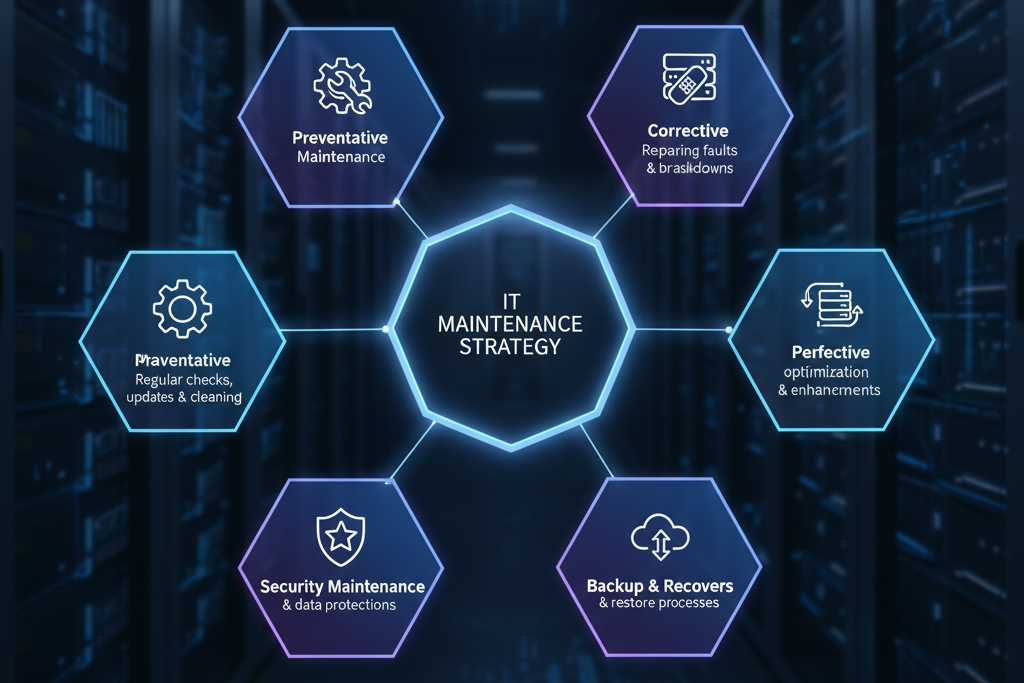
There are different types of IT maintenance that collectively protect business systems from failure and inefficiency.
1. Preventive IT Maintenance
This is all about prevention before problems arise. Preventive IT maintenance includes regular software updates, patch management, and system audits. These tasks identify potential risks early, reducing the chance of sudden breakdowns.
2. Corrective IT Maintenance
When an issue is detected, corrective maintenance fixes it promptly. This could be repairing a network fault, restoring lost files, or resolving system crashes. Quick corrective action minimizes downtime and prevents data loss.
3. Predictive IT Maintenance
Using advanced analytics and AI, predictive IT maintenance forecasts potential failures based on data trends. For example, machine learning can detect server overloads before they cause outages — improving uptime and reliability.
Learn more about predictive analytics from IBM’s AI Operations.
The True Cost of Downtime
Downtime affects more than just IT systems — it disrupts employees, customers, and revenue flow.
Financial Losses
Businesses can lose thousands per hour due to halted operations. For eCommerce or SaaS companies, every minute of downtime equals missed transactions and dissatisfied customers.
Productivity Impact
When systems go down, employees can’t access files or communication tools. This ripple effect slows collaboration and decision-making across departments.
Customer Trust and Reputation
Frequent outages erode brand trust. A single downtime incident can drive customers to competitors, especially in industries where reliability is non-negotiable — like finance or healthcare.
How Regular IT Maintenance Prevents Downtime
Enhanced System Performance
Routine updates ensure all applications run smoothly and securely. Maintenance also prevents bottlenecks, enhancing system responsiveness and speed.
Early Detection of Vulnerabilities
Proactive IT maintenance detects cyber vulnerabilities before they’re exploited. This includes updating firewalls, antivirus software, and performing penetration tests.
Backup and Recovery
Scheduled backups ensure that even if a failure occurs, your business data is protected and recoverable. This drastically reduces downtime duration and risk of permanent data loss.
Hardware Longevity
Maintaining servers, routers, and workstations prevents premature equipment failure, reducing replacement costs and extending asset lifespan.
IT Maintenance Best Practices for Businesses in 2025
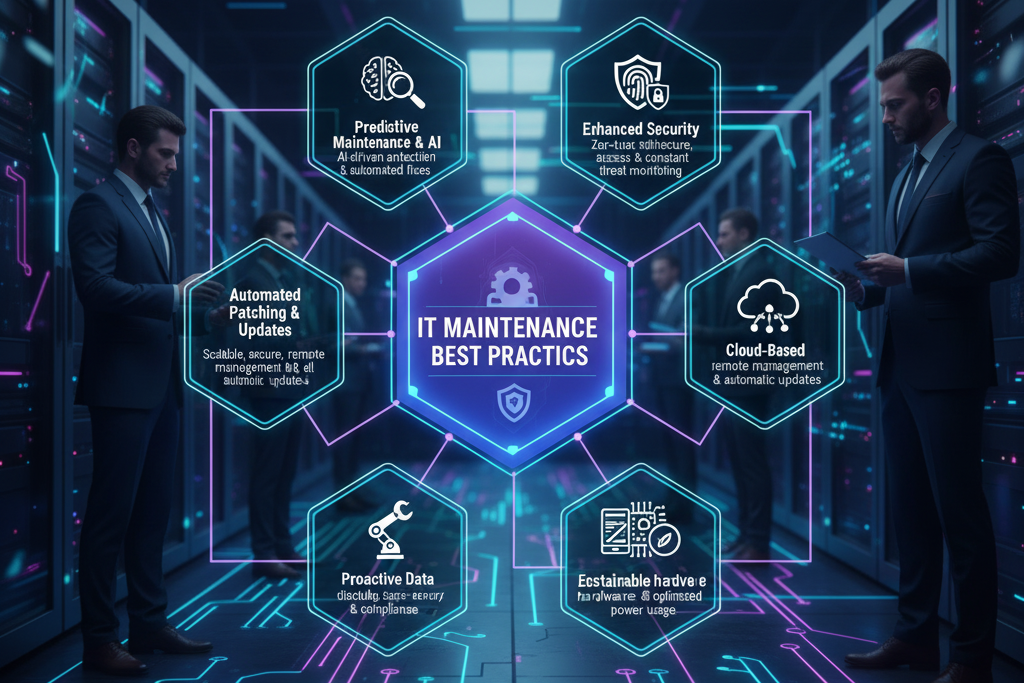
To ensure optimal uptime and business continuity, companies should implement these proven IT maintenance strategies:
- Automate Routine Updates: Use AI-powered systems to perform automatic security patches and software upgrades.
- Monitor Networks 24/7: Deploy monitoring tools that alert your IT team to unusual activity or slowdowns.
- Conduct Regular Security Audits: Evaluate system integrity, especially after major updates or integrations.
- Create a Disaster Recovery Plan: Ensure your business has tested backup solutions and recovery protocols.
- Train Employees: Educate staff on cybersecurity and safe IT practices to minimize human error.
The Role of Managed IT Services
For many businesses, outsourcing IT maintenance to specialized providers is a smart choice. Managed IT services deliver constant monitoring, preventive care, and expert troubleshooting — often at a lower cost than in-house operations.
These providers ensure your infrastructure runs smoothly and securely, helping you avoid downtime and focus on growth.
The Future of IT Maintenance — Automation and AI
AI-driven tools are transforming IT maintenance by automating repetitive tasks and predicting potential failures before they happen. Predictive analytics, cloud monitoring, and automated ticketing systems allow IT teams to respond to issues faster than ever.
This shift from reactive to proactivity ensures minimal downtime, improved ROI, and better system stability.
Case Study — How Proactive IT Maintenance Saved a Company Millions
A global logistics firm faced frequent server outages affecting shipment tracking. By implementing a predictive IT maintenance system, it reduced downtime by 60% and saved over $2 million annually in lost productivity and customer refunds.
This case highlights the tangible benefits of investing in regular IT upkeep.
IT Maintenance Is Your Downtime Shield
In an era where every second counts, IT maintenance isn’t just a technical requirement — it’s a strategic advantage. Regular system checks, proactive monitoring, and predictive analytics empower businesses to stay operational, secure, and competitive.
Downtime may be inevitable, but its impact can be minimized — if you maintain your systems before they fail.
Optimize Your IT Systems with Tiso Studio
At Tiso Studio, we specialize in helping businesses strengthen their IT foundations through innovative technology and proactivity. Our team ensures your systems stay resilient, secure, and scalable for the future.
Let’s minimize downtime and maximize uptime — together.
Explore more insights at Tiso Studio Emerging Technology.
FAQ’S
1. How often should businesses perform IT maintenance to prevent downtime?
Ideally, IT maintenance should be performed continuously through automated monitoring, with scheduled updates happening weekly or monthly. Critical security patches should be applied immediately to avoid vulnerability gaps.
2. Can small and mid-sized businesses benefit from predictive IT maintenance, or is it only for large enterprises?
Predictive maintenance is now accessible to SMEs thanks to affordable AI-powered tools. Even small businesses can deploy cloud-based monitoring solutions that detect failures before they occur — without massive infrastructure investments.
3. How does IT maintenance improve cybersecurity protection?
Regular maintenance keeps systems patched against exploits, identifies suspicious activity early, and ensures backup systems are ready during ransomware or malware attacks. Without maintenance, outdated systems become easy entry points for cyber threats.
4. What is the difference between preventive and corrective IT maintenance?
Preventive maintenance stops issues before they happen through updates, monitoring, and audits. Corrective maintenance is reactive — fixing a breakdown after it occurs. Preventive maintenance is always cheaper and far less disruptive than corrective repair.
5. Should companies outsource IT maintenance or keep it in-house?
It depends on business size, expertise, and infrastructure complexity. Many companies outsource to managed IT service providers because they offer 24/7 monitoring, faster response times, and lower long-term costs compared to staffing full-time internal teams.




Recent Comments