
Personalization in Marketing with Machine Learning: Driving Customer Engagement in 2025
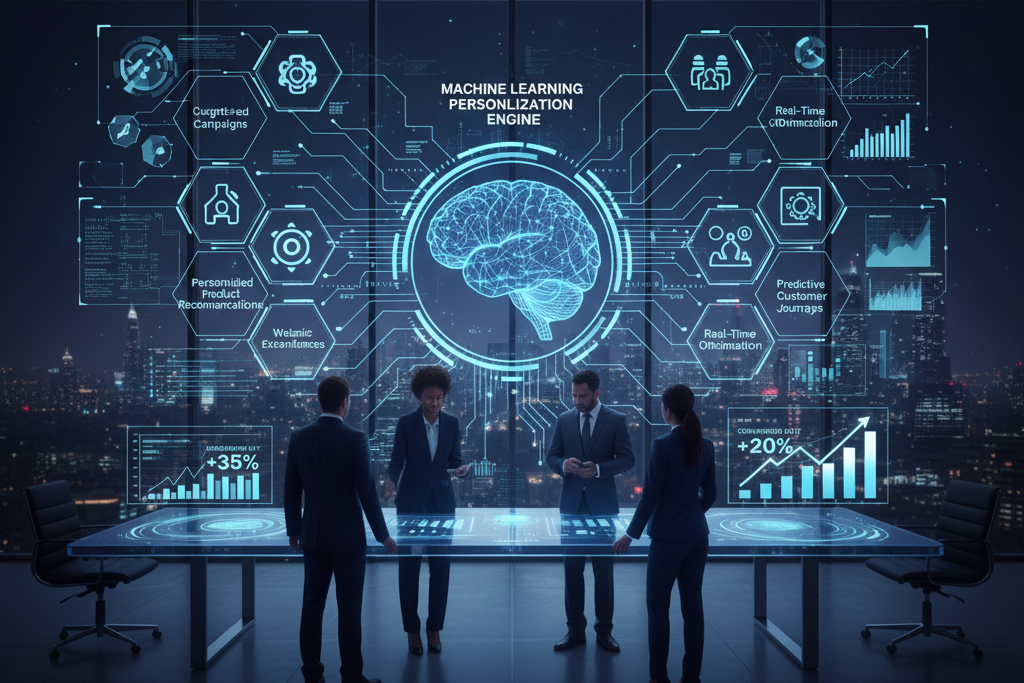
In 2025, personalization in marketing with machine learning (ML) is not just an innovation — it’s a necessity. Modern consumers expect brands to understand their needs, predict their preferences, and deliver experiences that feel uniquely crafted for them. Thanks to ML-driven algorithms, marketers can now achieve this at scale.
Machine learning enables personalization beyond simple segmentation — it learns from behavior, context, and real-time interactions. This article explores how ML is transforming marketing personalization, its business benefits, use cases, tools, and a roadmap to adopt this technology strategically.
Why Personalization in Marketing with Machine Learning Matters Today
Customer expectations have evolved dramatically. According to McKinsey, over 70% of consumers expect personalized interactions, and 76% get frustrated when brands don’t deliver them. Personalization in marketing with machine learning allows businesses to process large data sets, analyze behavior, and tailor messages to individual users instantly.
Traditional marketing relied on demographic segments like age or gender. ML-powered systems go deeper — identifying micro-patterns in online activity, purchase history, and engagement across channels. The result? Sharper targeting, improved ROI, and stronger customer loyalty.
How Machine Learning Powers Marketing Personalization
To understand the impact of personalization in marketing with machine learning, it’s important to look at how ML actually works behind the scenes.
1. Data Collection and Integration
Machine learning systems pull data from multiple sources — CRM databases, website analytics, social media, and IoT devices — to build unified customer profiles.
2. Predictive Modeling
Using algorithms such as regression, clustering, and neural networks, ML models predict what a user is likely to do next: click, purchase, unsubscribe, or switch to a competitor.
3. Real-Time Decision Making
ML enables marketers to respond instantly to customer actions. For instance, an e-commerce site can recommend complementary products right after a purchase is made.
4. Continuous Learning
Unlike static rules, ML systems keep learning from new data, refining recommendations and improving campaign effectiveness over time.
By automating these processes, personalization in marketing with machine learning saves time while dramatically increasing campaign precision.
Business Benefits of Machine Learning Personalization
Adopting personalization in marketing with machine learning offers measurable business advantages:
Improved Customer Engagement
Personalized content increases open rates, click-through rates, and conversion rates across channels.
Higher Customer Lifetime Value (CLV)
By predicting what customers want next, businesses can retain them longer and upsell effectively.
Reduced Marketing Costs
Automated personalization minimizes wasted ad spend and optimizes targeting accuracy.
Better Customer Insights
ML uncovers patterns humans might miss — enabling strategic decisions based on predictive analytics rather than guesswork.
Scalable Personalization
Whether you have 1,000 or 10 million customers, ML can handle personalization at scale with consistent quality.
Real-World Use Cases of Personalization in Marketing with Machine Learning
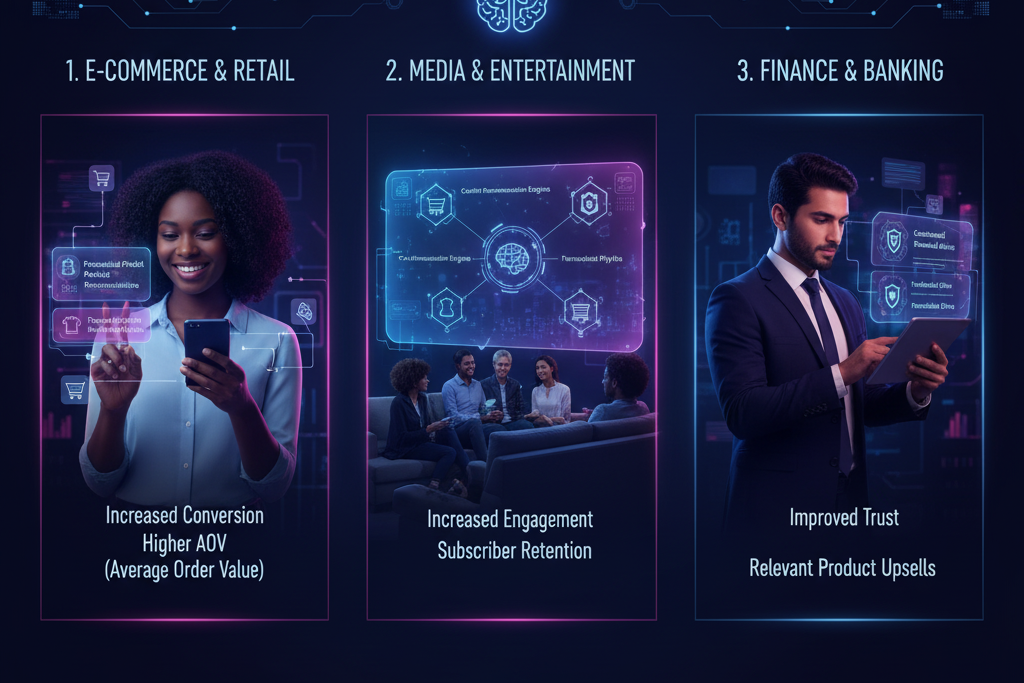
Machine learning personalization is reshaping industries across the board:
E-commerce
Amazon and Shopify merchants use ML to recommend products, predict shopping cart abandonment, and personalize homepages based on user history.
Streaming & Media
Netflix and Spotify apply ML algorithms to analyze watch and listen habits, ensuring users stay engaged through tailored content suggestions.
Financial Services
Banks use ML to personalize product recommendations and detect patterns in customer spending for better financial advice.
Travel & Hospitality
Airlines and hotel chains deploy ML to offer personalized itineraries, room upgrades, or loyalty offers based on previous bookings.
Healthcare Marketing
Pharmaceutical brands and healthcare platforms use ML-driven personalization to provide relevant wellness content and reminders, improving patient engagement.
For more insights, visit McKinsey’s marketing automation research.
Essential Data Inputs for ML-Powered Personalization
Personalization in marketing with machine learning depends heavily on the right data inputs:
- Demographic data: Age, gender, income, and location.
- Behavioral data: Page visits, clicks, search terms, purchase history.
- Contextual data: Device type, time of day, and geographic location.
- Psychographic data: Interests, motivations, and lifestyle preferences.
- Real-time signals: Current browsing or app behavior.
Collecting and cleaning this data is critical before feeding it into machine learning models.
Challenges in Implementing Personalization in Marketing with Machine Learning
While the benefits are immense, organizations often face a few roadblocks:
Data Privacy and Compliance
With laws like GDPR and CCPA, marketers must balance personalization with ethical data practices.
Data Quality Issues
Incomplete or inconsistent data can lead to inaccurate predictions.
Technology Integration
Combining CRM, analytics, and marketing platforms requires strong technical coordination.
Bias and Fairness
ML systems can reflect societal biases in data if not monitored carefully.
To mitigate these, marketers should ensure explainable AI frameworks, regular audits, and transparent communication with consumers.
How to Implement Personalization in Marketing with Machine Learning
Here’s a practical roadmap for businesses:
Step 1: Define Clear Goals
Decide whether your objective is improving conversions, reducing churn, or increasing engagement.
Step 2: Consolidate Data Sources
Unify customer data across CRM, website, and social channels.
Step 3: Choose the Right Tools
Use ML-based personalization platforms like Adobe Sensei, Salesforce Einstein, or Google Marketing Platform.
Step 4: Train and Test Models
Feed historical data into ML models and validate predictions through A/B testing.
Step 5: Automate and Integrate
Integrate personalized recommendations into your marketing automation tools for real-time execution.
Step 6: Monitor and Optimize
Use dashboards to track engagement, conversions, and ROI. Refine models based on performance metrics.
Measuring the ROI of Machine Learning Personalization
Marketers can assess success using measurable KPIs:
- Conversion Rate Uplift
- Click-Through Rate (CTR)
- Customer Retention Rate
- Customer Lifetime Value (CLV)
- Engagement Metrics (time on site, bounce rate, repeat visits)
Run experiments with control groups to isolate the impact of ML-driven personalization.
Ethical and Responsible AI in Marketing
Ethics play a crucial role in personalization in marketing with machine learning. Businesses must ensure transparency, avoid manipulative tactics, and maintain user consent.
Developing ethical ML practices means:
- Using anonymized data
- Providing opt-out options
- Monitoring for bias and discrimination
- Communicating how data is used
Responsible personalization fosters customer trust — an invaluable asset for long-term brand growth.
Future Trends in Personalization and Machine Learning
The future of personalization in marketing with machine learning is incredibly dynamic. Emerging trends include:
- Generative AI for content creation: Personalized copy and visuals for individual users.
- Voice and conversational personalization: AI assistants tailoring experiences through speech.
- Omnichannel AI orchestration: Unified personalization across email, web, social, and apps.
- Real-time adaptive personalization: Campaigns that evolve instantly with user behavior.
As tools evolve, marketers who harness these innovations will gain a powerful edge.
Conclusion
Personalization in marketing with machine learning is reshaping how brands communicate with customers. It empowers marketers to deliver real-time, relevant, and emotionally resonant experiences that boost engagement and loyalty.
Organizations that strategically integrate ML into their personalization efforts will stand out in a crowded digital landscape — turning every customer interaction into a meaningful connection.
Ready to Personalize Your Marketing with Machine Learning?
Your customers expect more than just marketing — they expect experiences that understand them. Let Tiso Studio help you implement machine learning-powered personalization strategies that elevate engagement and accelerate growth.
Contact Tiso Studio today to create marketing that truly connects.
FAQ’S
1. How does machine learning improve personalization in marketing compared to traditional methods?
Traditional marketing relies on broad segmentation, while machine learning analyzes real-time data, behavior patterns, and predictive analytics to deliver 1:1 personalization. This leads to more relevant messaging and higher engagement.
2. Do small businesses also benefit from machine learning-based personalization, or is it only for large enterprises?
Yes, small businesses can benefit as well. Cloud-based personalization platforms and low-code AI tools now make ML-driven marketing accessible without large infrastructure investments.
3. What kind of data is required to implement AI personalization effectively?
A combination of demographic, behavioral, psychographic, and real-time interaction data is ideal. The more complete and clean the data is, the more accurate the personalization model becomes.
4. Is personalization with machine learning compliant with privacy laws like GDPR and CCPA?
Yes, as long as the organization uses anonymized data, collects consent transparently, and provides opt-outs. Ethical AI frameworks ensure personalization is both effective and compliant.
5. How long does it take to see measurable ROI from ML-driven personalization?
Most businesses begin seeing engagement and conversion improvements within 4–12 weeks, depending on data volume, integration maturity, and campaign complexity.



Recent Comments