
SEO Best Practices in 2025: Strategies That Still Drive Results

Introduction: Why SEO Still Matters in 2025
In 2025, SEO best practices remain at the core of every successful digital marketing strategy. Despite AI-driven automation, voice search, and advanced personalization reshaping the online experience, SEO continues to determine how businesses are discovered and trusted online.
For brands and marketers, the question isn’t whether SEO still works—it’s how to apply it effectively in 2025. With constant Google algorithm updates and smarter search behavior, adapting to the latest SEO standards has never been more essential.
Understanding the Evolution of SEO Best Practices in 2025
SEO has evolved from simple keyword stuffing and backlink building to a sophisticated, user-intent–driven science. In 2025, SEO best practices emphasize contextual relevance, technical optimization, and experience-driven engagement.
Businesses that integrate AI-driven analytics, semantic search, and structured data now outperform those relying solely on traditional tactics.
Core SEO Best Practices in 2025 That Still Work
1. Focus on User Intent and Content Relevance
Google’s algorithms have become increasingly adept at interpreting user intent. Instead of focusing solely on keywords, create content that solves specific problems and aligns with what users want to know.
Using SEO best practices in 2025 means mapping your content to the three types of search intent—informational, navigational, and transactional. This ensures your site attracts and converts the right visitors.
2. Leverage Semantic Search Optimization
In 2025, semantic search—Google’s ability to understand meaning rather than exact keywords—continues to dominate rankings.
Focus on synonyms, natural language, and long-tail keyphrases to match user intent.
For example, instead of optimizing for “SEO techniques,” consider related terms like “how to optimize content for search engines” or “modern SEO strategies.”
3. Optimize for Mobile-First Indexing
Mobile-first indexing is now the default for Google’s ranking systems. Every site must be responsive, fast, and accessible across all devices.
Implementing SEO best practices such as lightweight design, structured navigation, and optimized image sizes ensures smooth performance.
4. Speed, Core Web Vitals, and Technical SEO
Website speed and user experience remain critical ranking factors. Google’s Core Web Vitals—Largest Contentful Paint (LCP), First Input Delay (FID), and Cumulative Layout Shift (CLS)—measure page interactivity and stability.
Make sure your site:
- Loads in under 2.5 seconds
- Has optimized images and minimal scripts
- Uses caching and a CDN
For deeper insights, tools like Google PageSpeed Insights can help fine-tune performance.
5. E-A-T Principles and Trust Signals
Google still prioritizes Expertise, Authoritativeness, and Trustworthiness (E-A-T) when ranking pages.
To strengthen your E-A-T score:
- Publish data-driven, factual content
- Include author bios and sources
- Earn backlinks from trusted sites like Moz or Search Engine Journal
These are vital SEO best practices in 2025, ensuring credibility and long-term visibility.
Integrating AI and Automation in SEO Best Practices
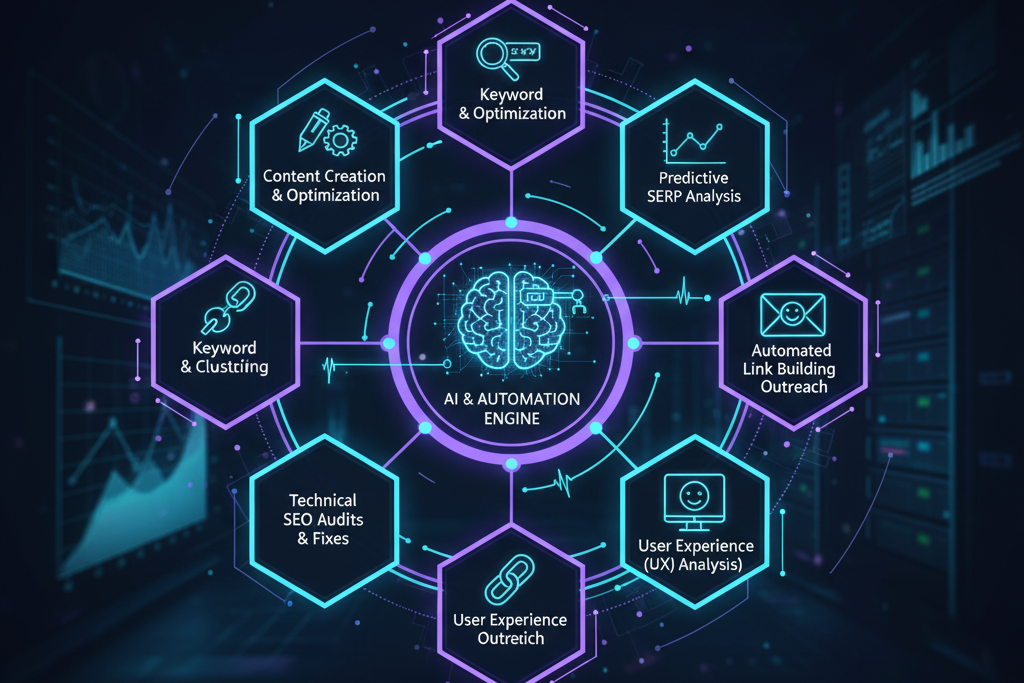
AI tools are revolutionizing how marketers conduct keyword research, analyze performance, and create content.
1. AI-Driven Keyword Research
Modern tools like Ahrefs, SEMrush, and Google’s AI-powered Search Console analyze trends and predict keyword relevance. These insights help marketers target high-value queries aligned with searcher intent.
2. Predictive Analytics for Content Strategy
Predictive models use historical data to forecast future trends—helping you create content before demand spikes. By integrating AI-driven SEO practices, brands can maintain consistent visibility in competitive niches.
The Role of Voice and Visual Search in SEO Best Practices 2025
Voice search is reshaping SEO by encouraging more conversational keywords. Queries like “What’s the best SEO strategy in 2025?” are now common.
Voice Search Optimization
To adapt, include question-based headings, concise answers, and natural language flow. Tools like AnswerThePublic help identify common voice-based queries.
Visual Search Optimization
Images play a major role in modern SEO. Add alt attributes containing your keyphrase, such as “SEO best practices in 2025 infographic,” to boost relevance and accessibility.
On-Page SEO Best Practices That Still Deliver
1. Strategic Keyphrase Placement
Distribute your focus keyphrase—SEO best practices in 2025—throughout the introduction, subheadings, image alt texts, and conclusion for balanced optimization.
2. Compelling Meta Titles and Descriptions
Ensure your SEO title starts with the keyphrase and your meta description naturally incorporates it.
3. Internal and Outbound Linking
Internal linking strengthens site structure. Add links to related posts on Tiso Studio’s Emerging Technology page.
Outbound links to trusted SEO resources like HubSpot’s SEO Guide build authority and context.
Content Quality: The Ultimate SEO Differentiator
No algorithm can outperform high-quality, human-centered content. In 2025, success depends on audience engagement metrics such as dwell time, bounce rate, and return visits.
To align with SEO best practices, ensure your content:
- Provides unique value
- Uses transition words for better readability
- Incorporates active voice
- Is updated regularly
Local SEO Best Practices in 2025
Local search has grown rapidly with “near me” queries increasing by over 200% in recent years.
1. Optimize Google Business Profile
Keep your business profile updated with accurate contact information, keywords, and reviews.
2. Focus on Local Content and Schema Markup
Use location-specific keywords and structured data to appear in Google’s local 3-pack.
The Future of SEO Best Practices Beyond 2025
SEO will continue evolving as AI, AR, and predictive algorithms redefine how people search. However, the foundations—technical soundness, authentic content, and user satisfaction—will remain constant.
Companies that blend human creativity with automation will thrive in the next phase of digital marketing.
Why Partner with Tiso Studio for SEO in 2025
At Tiso Studio, we understand that mastering SEO best practices in 2025 requires more than algorithms—it demands strategy, innovation, and consistency.
Our experts combine data analytics, AI insights, and creative content to help your brand dominate search rankings.
Elevate Your Digital Visibility with Tiso Studio
Your audience is searching. Make sure they find you first.
Partner with Tiso Studio today to implement SEO strategies that actually deliver results in 2025 and beyond.
FAQ’S
1. What is the biggest change in SEO best practices in 2025 compared to previous years?
The biggest shift is the move from keyword-based ranking to intent-based SEO powered by AI and semantic understanding. Google now prioritizes content that solves real user problems rather than just repeating keywords.
2. Is SEO still effective in 2025 with AI-generated content dominating the web?
Yes — but only when done correctly. Google now rewards human-quality, context-rich content backed by expertise. AI alone is not enough; strategy, authenticity, and trust signals remain essential ranking factors.
3. How important is Core Web Vitals for SEO rankings in 2025?
Extremely important. Core Web Vitals now act as foundational ranking signals. A slow or unstable website can outrank great content if the user experience is poor. Speed + UX = stronger SEO performance.
4. Do I still need backlinks in 2025, or does Google rely only on content quality?
Backlinks still matter — but quality beats quantity. Google now prioritizes contextual, high-authority backlinks from reputable, niche-relevant publishers instead of mass directory links or outdated link-building tactics.
5. How does AI help improve SEO performance for businesses in 2025?
AI accelerates SEO through predictive analytics, voice search optimization, dynamic content suggestions, and automated technical audits — allowing marketers to anticipate trends and rank ahead of competitors.





Recent Comments