

Virtual Reality in medicine is transforming the healthcare landscape, offering innovative ways to enhance patient care, reduce pain, and improve medical training. From immersive therapy sessions to surgical simulations, Virtual Reality in medicine is revolutionizing how patients experience treatment and how healthcare professionals deliver care. With growing adoption, Virtual Reality in medicine is becoming an essential tool for modern hospitals seeking better outcomes.
What Is VR in Healthcare?
Virtual Reality (VR) in healthcare refers to immersive environments—often computer‑generated—that patients or professionals can engage with using devices such as headsets (e.g., Oculus, HTC Vive), motion sensors, haptic feedback tools, and specialized software. These environments can simulate real‐world settings (e.g. operating rooms, clinics), or create entirely synthetic spaces for therapy, training, or patient education.
Key distinctions:
- Immersive vs. Non‑immersive VR: Fully immersive uses headsets and often motion/haptic feedback; non‑immersive may use screens or simpler devices.
- Therapeutic vs. Educational vs. Diagnostic Use: Some VR is aimed at treating or rehabilitating patients; some is for training clinicians; some is used to improve diagnostics or pre‑operative planning.
Why VR Matters for Patient Experience
Enhancing patient experience is about more than comfort—it’s about improving outcomes, reducing anxiety, boosting satisfaction, and making treatments more accessible. VR supports:
- Pain mitigation & anxiety reduction
Immersive experiences distract the brain, reduce perceived pain during procedures, and calm patients during stressful medical treatments. - Better patient understanding & education
Patients often struggle to understand surgical procedures, complex anatomy, or disease progression. VR allows visual, interactive, and immersive explanations, improving comprehension and adherence. - Rehabilitation & physical therapy
Patients recovering from injury, surgery, or neurological conditions benefit when therapy is engaging, motivating, and customizable. VR can offer immersive, gamified rehabilitation exercises that improve consistency. - Mental health support
VR is increasingly used for treating PTSD, phobias, anxiety, and other mental health issues. Controlled virtual settings help in exposure therapy, relaxation, guided imagery, etc. - Training clinicians safely
Although not directly patient‑facing, clinician training with VR improves safety, reduces mistakes, enhances empathy, and thus indirectly enhances patient care.
Key Applications of VR in Healthcare
Here are the major domains where VR is already making a difference.
1. Pain Management & Procedural Distraction
Medical trials have found that short VR sessions can significantly reduce pain. For example, cancer patients using immersive VR during treatment reported greater pain relief than those using more traditional distractions (guided imagery on a tablet). VR’s pain relief often persists beyond the immediate session. [Example: Georgetown/MedStar cancer trial]
Using VR headsets during painful procedures such as wound care, dental work, injections, or during regional anesthesia has been shown to reduce anxiety and improve patient comfort.
2. Physical Rehabilitation & Recovery
VR‐assisted physical therapy helps patients regain mobility, strength, or coordination after stroke, surgery, or traumas. Immersive therapy, motion tracking, gamified feedback, and real‐time monitoring make rehab more engaging and often more effective.
For example, stroke survivors using immersive VR showed improvements in upper limb function and daily activities when compared to conventional therapy.
3. Mental Health: Anxiety, PTSD, Phobias
VR enables safe exposure to stimuli that might trigger anxiety or phobia, under controlled and therapeutic conditions. It is also being used in guided meditation and immersive relaxation environments to manage chronic stress.
4. Medical Education, Surgical Training & Preoperative Planning
Doctors, surgeons, and medical students benefit from realistic, risk‐free simulations using VR. These can include simulated surgeries, anatomy exploration in 3D, or rehearsals of complex operations. VR planning allows better spatial understanding of anatomy before going into the operating room.
More than 75% of healthcare organizations surveyed have implemented or plan to implement VR for training, including pre‐operative preparation and soft skills like communication.
5. Patient Education & Engagement
Giving patients immersive visualizations can help clarify diagnoses, surgical plans, or disease progression. VR can make medical information more accessible and less intimidating. When patients better understand their condition, they are more likely to follow treatment plans and feel more satisfied.
6. Remote Care & Telehealth Extensions
VR can bridge geographical gaps. Specialists can collaborate virtually, review 3D anatomical visuals with patients who are distant, or supervise rehabilitation remotely via VR platforms. This is especially useful in regions with limited access to advanced medical facilities.
Evidence & Case Studies
To build trust, healthcare providers want evidence. Below are selected findings from recent literature and case studies illustrating VR’s impact.
| Case / Study | Context | Key Findings |
|---|---|---|
| Scoping Review (2023) | Medical education + patient care & outcomes | ~75% of studies reported improvements in patient care; improvements in pain & anxiety, motor function, cognitive impairment. |
| Survey by Virti | Healthcare organizations using VR / planning to | 34% already implemented, 43% planning; use cases include pre‐op prep, communication, best practice sharing. |
| Stroke Rehabilitation Meta‑Analysis | Immersive vs non‑immersive VR vs conventional therapy for stroke | Immersive VR provided greater benefits in upper limb activity and daily life tasks compared to non‐immersive; both comparable to conventional therapy in many measures. |
| VR in surgeries & patient comfort | Examples in UK hospitals and elsewhere | Use of VR headsets during operations under regional anesthesia: majority of patients reported feeling calmer, lower pain. |
Benefits & ROI: What Healthcare Providers Gain
From the institutional perspective, VR offers numerous advantages. Understanding these helps in justifying investment and aligning with strategic goals.
“How Virtual Reality in medicine Reduces Pain and Anxiety”
“Virtual Reality in medicine for Mental Health Therapy”
- Improved Patient Satisfaction & Experience
Institutions using VR often report higher satisfaction scores, more positive patient feedback, less anxiety, and better trust. - Better Clinical Outcomes
Reduced pain, better rehabilitation results, increased compliance with therapy, and enhanced understanding of treatment contribute to better health outcomes. - Cost‑Effectiveness Over Time
Although initial investments (hardware, software, training) are high, savings can come from reduced medications, shorter hospital stays, fewer complications, and less need for repeated procedures. - Staff Training Efficiency & Safety
VR offers repetitive, risk‑free simulations. Surgeons can rehearse; medical students can train without the risks inherent to working on live patients. Fewer errors and higher confidence. - Scalability and Accessibility
Remote VR interventions and telehealth extensions allow institutions to reach more patients, including those in rural or underserved areas.
Challenges & Limitations
While promising, VR in healthcare is not without obstacles. Awareness of these helps institutions plan better.
“Challenges of Implementing Virtual Reality in medicine”
- Cost & Infrastructure: High‑quality headsets, immersive software, maintenance, updates, and staff training can be expensive initially.
- Device Comfort & Accessibility: VR headsets can cause motion sickness, visual strain; may not suit all patient populations (e.g. elderly, those with vestibular disorders).
- Standardization & Evidence Gaps: Many studies have small sample sizes; heterogeneity in protocols, devices, and outcome measures makes comparison difficult. Long‑term effects are less well understood.
- Regulatory & Privacy Concerns: Medical data, patient‐specific visuals, remote sessions and data storage raise privacy concerns. Regulatory oversight in different countries varies.
- Integration with Existing Healthcare Systems: Alignment with electronic health records (EHR), clinician workflows, insurance reimbursement, scheduling, etc., can create friction.
Best Practices for Implementing VR in Patient‑Centric Care
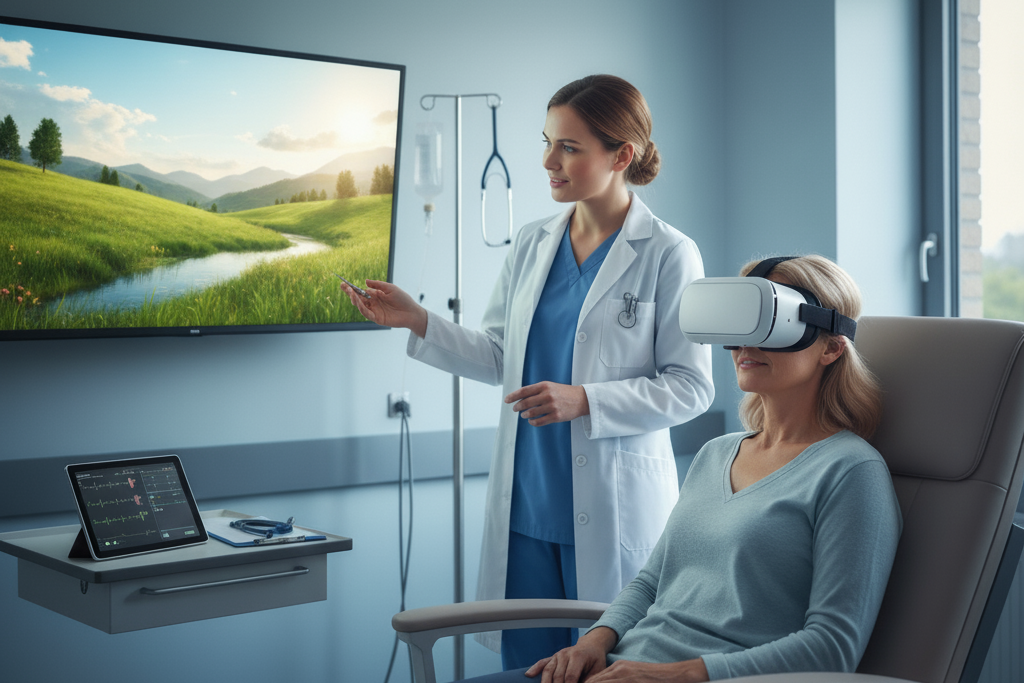
For healthcare providers considering VR, these recommendations can help maximize impact and mitigate risk.
- Start with Clear Objectives
Define what you want to improve: pain reduction, anxiety, rehab, training, patient education, etc. Metrics must be identified (e.g. pain scores, patient satisfaction, recovery time). - Choose Appropriate VR Modality
Decide between immersive vs. non‑immersive VR based on patient tolerability, resources, and the goal of the intervention. - Pilot Programs & Controlled Trials
Before rolling out widely, run pilot studies within your setting to evaluate feasibility, patient response, technical issues. Collect data to support scaling. - Patient Safety & Comfort
Monitor for motion sickness, ensure headsets are clean and comfortable, limit session duration, tailor experiences to patient capabilities (age, mobility, cognitive status). - Training for Staff
Healthcare staff need training on VR operation, troubleshooting, understanding VR’s therapeutic limits. Include tech support. - Content Quality
High‑quality, clinically vetted content matters. Realistic visuals, accurate anatomical models, proper feedback and interactivity are essential. - Integration & Follow‑Up
Integrate VR interventions into clinical workflows. Ensure follow‑up assessments. Use patient feedback to iterate. Align with reimbursement models or insurance where applicable. - Privacy, Ethics & Regulation Compliance
Adhere to HIPAA, GDPR, or country specific healthcare data protection laws. Ensure patient consent for VR sessions involving data capture. Evaluate the ethical implications of immersive experiences (trauma, exposure etc.).
Future Trends & What to Watch
As VR matures, several trends are likely to shape how it enhances patient experience:
- AI‑Enhanced VR: Using artificial intelligence to adapt VR experiences dynamically to patient responses (e.g. adjusting difficulty in rehab, monitoring stress or discomfort).
- Haptic Feedback & Sensory Integration: Better tactile, sensory feedback to make virtual environments more realistic, benefiting therapy and training.
- Mixed Reality (MR) & Extended Reality (XR): Blending virtual and real world to overlay data, anatomy visualizations directly over patients, using wearable displays.
- Remote & Home‑Based VR Therapies: As devices become more affordable and user‑friendly, more rehab, mental health, and pain management interventions will move into patients’ homes.
- Standardization & Regulatory Frameworks: More clinical trials, more standardized protocols, clearer regulatory guidelines for safety, efficacy, and data privacy.
Conclusion
VR in healthcare represents an exciting frontier for improving patient experiences. From pain relief to surgical planning, from mental health therapy to clinician training, the benefits are real—and growing. However, to fully realize the promise, careful implementation, rigorous evidence, attention to patient comfort, and regulatory compliance are essential.
Healthcare providers that embrace VR with a strategic, patient‑first mindset are well positioned to achieve better outcomes, greater patient satisfaction, and perhaps lower costs in the long run.
As VR technology becomes more accessible, we can expect a shift: VR interventions will move from niche pilot programs toward becoming standard components of patient care.
Redefining Healthcare Experiences with Virtual Reality
Virtual Reality isn’t just changing games—it’s changing lives. From easing pain to unlocking new ways of healing, VR is turning hospitals into places of hope, not fear.
Ready to step into the future of healthcare? Share this blog, spark the conversation, and join us on the journey where innovation meets compassion
FAQ’S
1. How is Virtual Reality actually used during medical treatment?
VR is used during procedures to reduce pain and anxiety by immersing patients in calming virtual environments. Hospitals also use VR for guided therapy, physical rehabilitation, surgical preparation, and distraction techniques during injections, wound care, and cancer treatments.
2. Can Virtual Reality really help with pain management in patients?
Yes. Clinical studies show that VR significantly reduces both pain intensity and anxiety by diverting the brain’s attention from the source of pain. It is now used as a drug-free alternative or supplement to pain medication during treatments and recovery.
3. Is VR therapy safe for all types of patients?
VR therapy is generally safe, but it may not be suitable for patients with epilepsy, severe motion sickness, or certain neurological conditions. Session length and intensity are usually customized to the patient’s comfort and clinical needs.
4. How does VR improve rehabilitation and physical therapy outcomes?
VR turns rehabilitation into an interactive, gamified experience, which increases patient engagement and consistency. Motion tracking and real-time feedback help patients regain motor skills faster while monitoring progress more accurately than traditional therapy.
5. What is the difference between VR for patients and VR for medical training?
VR for patients focuses on pain relief, therapy, rehabilitation, and emotional comfort. VR for clinicians is used to simulate surgeries, practice complex procedures, and improve communication or empathy—helping professionals train more safely before treating real patients.





Recent Comments